Stablecoins Explained Simply for Crypto Beginners
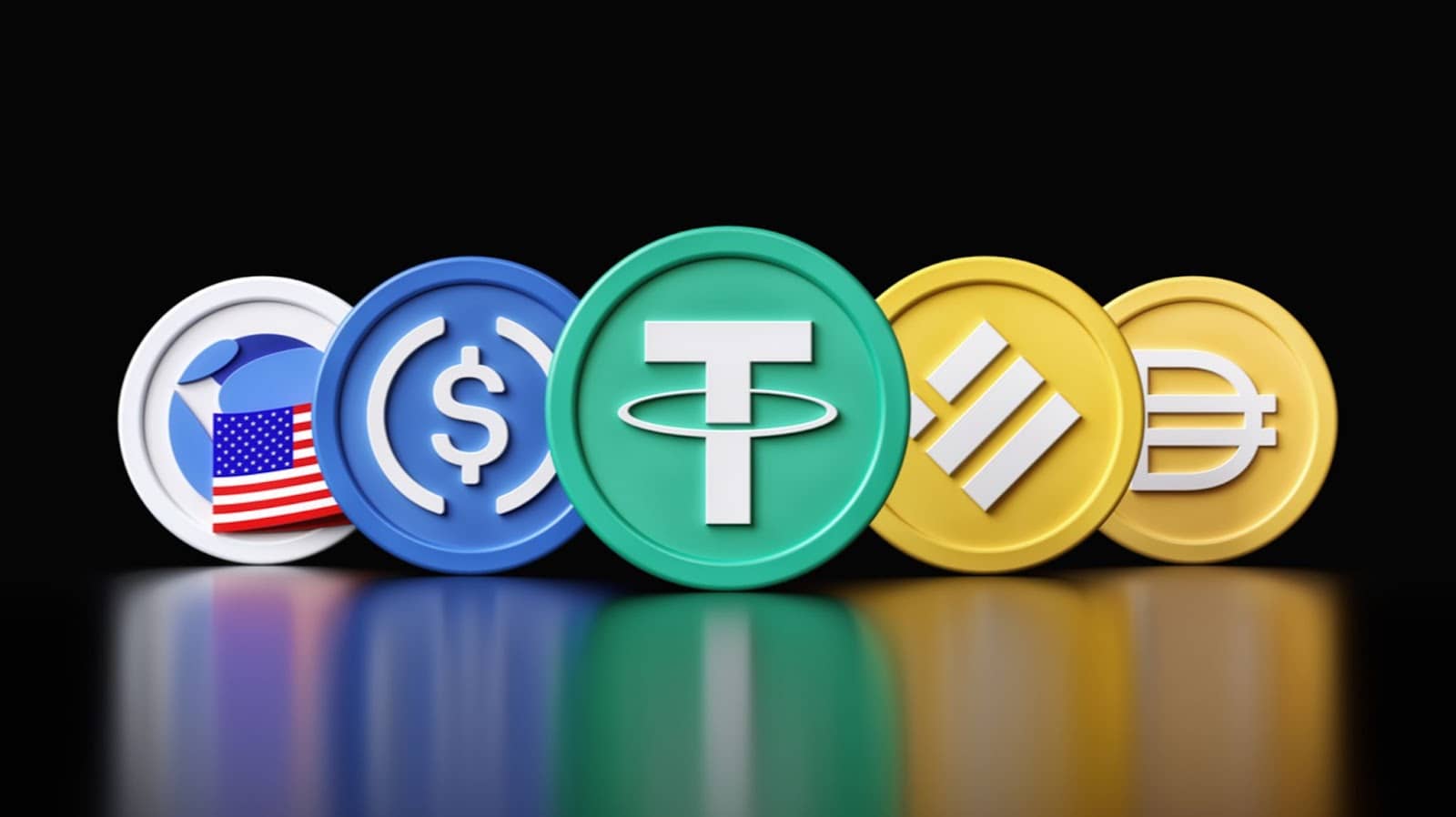
Stablecoins are cryptocurrencies designed to keep their price fixed to a normal currency, like the US dollar. If you look at Bitcoin, the price jumps up and down every day. A stablecoin aims to sit at exactly one dollar all the time.
Think of them as digital cash for the internet age. They let you move money fast across the world without dealing with the huge price swings of regular crypto. But while they seem simple on the top, how they keep that steady price matters a lot.
Why Do People Use Stablecoins?
Imagine buying a coffee with Bitcoin. You step up to the counter, order your drink, and pay. By the time you sit down, the price of Bitcoin might drop, making your coffee cost more than you thought. That hurts everyday spending.
Stablecoins fix this problem. They give you the speed of digital money without the wild price roller coaster. People use them to send money across borders, save cash in digital form, or store value while trading other coins.
In 2023, people moved trillions of dollars using stablecoins. That is more money than many major credit card companies process in a year. It shows that people really want digital money that stays still. You can learn more about how general digital money works by reading about Cryptocurrency history and tech.
Many traders use them as a safe haven. When the crypto market looks scary, they swap their risky coins for stablecoins. It feels like stepping off a stormy sea onto solid ground, even if it is still inside the digital market.
How Do Stablecoins Keep Their Price at One Dollar?
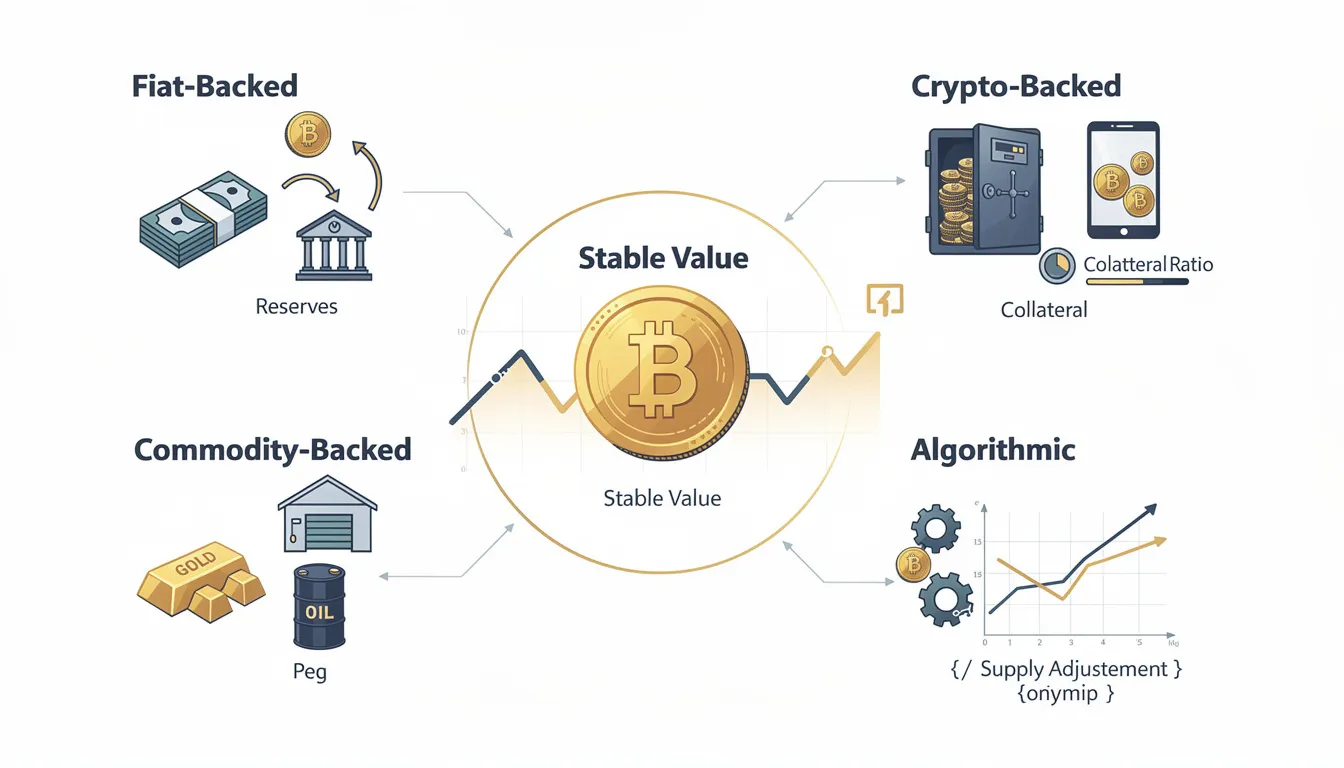
Keeping a coin at one exact dollar is not easy. Stablecoin creators use different methods to hold that price steady. Here are the three main ways they do it.
1. Fiat-Backed Stablecoins
This is the simplest type to understand. A company creates digital coins and puts real cash in a bank to back them up. For every digital dollar they create, they hold one real dollar in a real bank vault or government bond.
USDT and USDC are two big names here. If you buy one token, the company promises it has a real dollar sitting in safe storage. If everyone wants their real cash back, the company can open the vault and pay them. At least, that is how it should work if the company stays honest.
2. Crypto-Backed Stablecoins
Some people do not trust central banks or private companies. They want a stablecoin held up by other cryptocurrencies. But since crypto prices move fast, these coins must use a safety cushion called over-collateralization.
To get one dollar of a crypto-backed stablecoin like DAI, you might have to lock up $1.50 worth of Ethereum. That extra fifty cents acts as a shock absorber. If the price of Ethereum drops a bit, your stablecoin stays safe because of that extra cash cushion.
3. Algorithmic Stablecoins
This type uses computer code instead of real money in a vault. The code acts like a central bank. It automatically prints more coins when the price goes above one dollar. It buys and burns coins when the price drops below one dollar.
It sounds smart, but it carries high risks. If people lose trust in the system, the code can fail completely. When it fails, the price can collapse to zero in just a few days. We saw this happen with UST in 2022, which wiped out billions of dollars overnight.
The Real Risks You Need to Know
It is easy to think stablecoins are totally safe because of their name. But the word stable only talks about the goal, not a promise guaranteed by a government. Real money in a normal bank account has government insurance. Stablecoins do not.
If a bank holding the reserves goes under, the stablecoin firm might lose its money. If the company lies about how many dollars it has, the coin can break its promise to stay at one dollar. Traders call this breaking the peg.
Another risk is human error and computer hacks. If you store your coins on an unsafe website or lose your secret security keys, your money is gone. No bank manager can press a button to return your stolen funds. Staying safe requires care and good habits. You can read our guide to crypto security basics to learn how to keep your wallet safe.
Even history shows us that relying on trust during hard times can end badly. Think back to extreme history lessons like how Tsutomu Yamaguchi Survived Two Atomic Bombs in Three Days against all odds. Unexpected events happen when we least expect them, and sudden market crashes can test even the strongest digital systems.
Are Stablecoins Safe for Beginners?
No investment is completely safe. If you keep stablecoins, you face different risks than keeping cash in a bank. You have to decide if those risks are worth the convenience.
If you want to try using them, start very small. Put in an amount you could lose without stress. Look at the big fiat-backed coins that share clear audit reports every month. Audit reports show that an outside accounting firm checked their bank accounts to verify the real money is actually there.
Avoid algorithmic coins completely if you are just starting out. They are too complex and carry too much risk for a beginner. Stick to coins that have a long track record and clear rules.
How Do You Get and Store Stablecoins?
Getting your first stablecoin takes just a few steps. You can buy them on major exchanges using your normal bank card or wire transfer.
- Pick a well-known crypto exchange with good security reviews.
- Create your account and verify your identity using your photo ID.
- Deposit some local cash from your personal bank account.
- Buy your chosen stablecoin, like USDC or USDT.
- Move your coins to a private wallet if you plan to hold them long term.
Leaving your money on an exchange means trusting that company completely. If the exchange shuts down, your money goes down with it. Using your own software or hardware wallet puts you in total control of your cash.
If you want to read more about the foundation behind all these digital tokens, check out the main page for Blockchain to see how shared ledger networks record every transaction.
Final Thoughts for Your Crypto Journey
Stablecoins build a clear bridge between old paper cash and new digital money. They make moving funds cheaper and faster across borders, and they protect you from sudden market crashes when trading. But they carry real tech and company risks that cash in a bank does not have.
Before you swap any hard-earned dollars for digital ones, take a step back. Ask yourself why you want to hold them. Are you sending money to family, or just testing out new technology? Understanding your goal is the best way to keep your money safe.


Comments
Post a Comment